Carbohydrate
1 gram = about 4 kcal
A simple way to understand your body, calories, and food.
When people hear about nutrition, they often think of formulas, technical terms, or the idea that everything has to be calculated very precisely to be healthy. In reality, most people do not need to get that technical. Just understanding a few basic ideas can already help you know your body better and build habits that fit your daily life.
We want to present common and useful nutrition concepts in a way that is easier to understand. You can think of this page as a simple beginner's guide: easy to read and easy to use. If you want to learn more, you can always explore further. If not, you can still use the tools on this site right away.
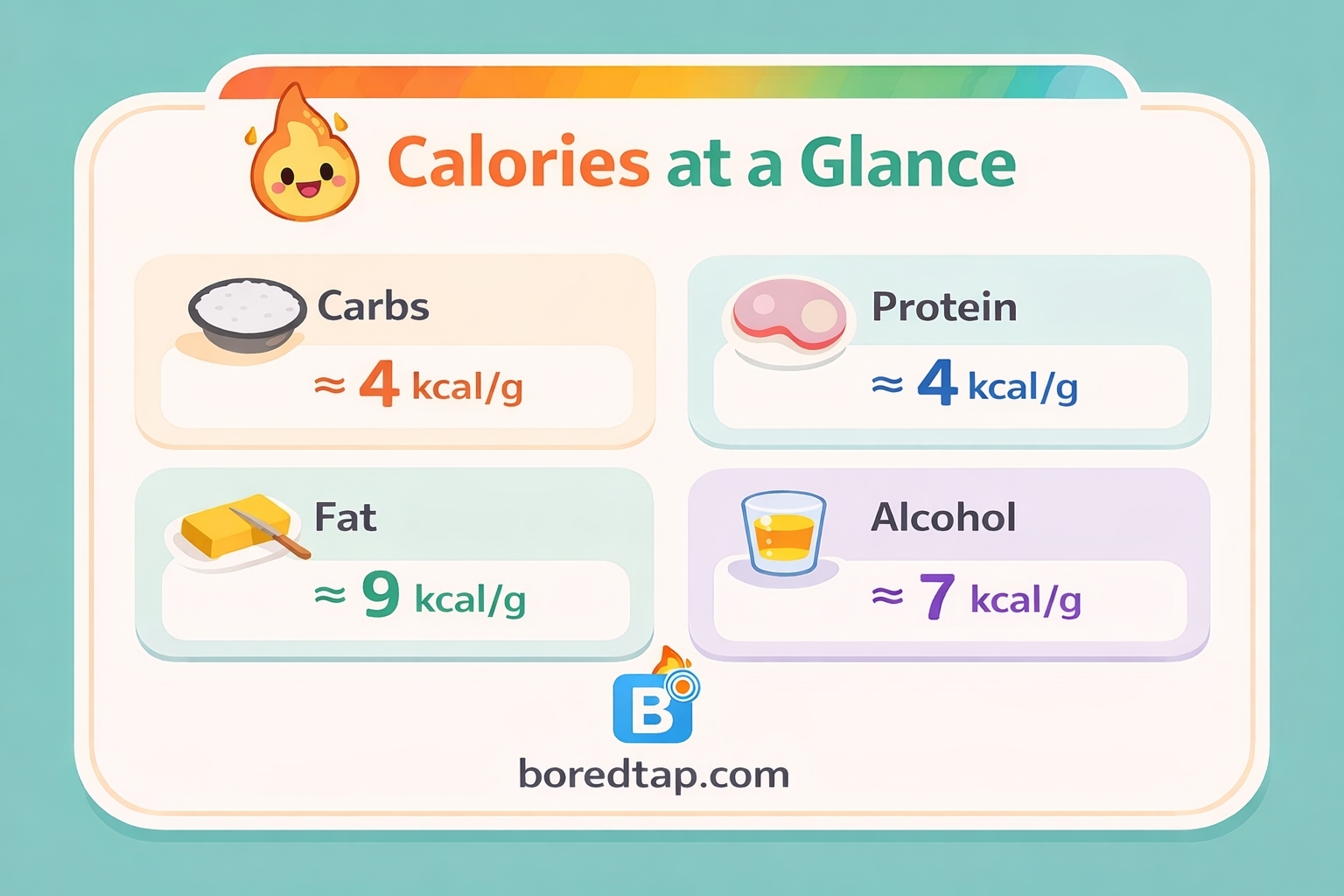
Carbohydrate
1 gram = about 4 kcal
Protein
1 gram = about 4 kcal
Fat
1 gram = about 9 kcal
Alcohol
1 gram = about 7 kcal
Carbohydrates, protein, and fat are three main nutrients your body needs, but each one provides a different amount of energy. Protein and carbohydrates provide about 4 kcal per gram, while fat provides about 9 kcal per gram. That is why foods high in fat can also be high in calories, even in smaller portions. That does not mean fat is bad. What matters more is your overall intake and your usual eating habits.
Protein is not only important for people who work out. It also helps with muscle repair, maintaining body tissues, and helping you feel full. Carbohydrates are also a main source of energy for many people in daily life. Instead of treating one nutrient as something you must always avoid, it is usually more practical to understand your general needs first, then adjust based on your activity level and lifestyle.
BMI is a very common and quick reference point. It gives you a rough idea of whether your weight is within a common range for your height. However, BMI is not a medical diagnosis, and it is not the only standard that matters. For example, people who do strength training or have higher muscle mass may have a higher BMI without being unhealthy. So when looking at BMI, there is no need to worry too much. It is best used as a starting point.
BMR and TDEE are also very useful concepts. BMR stands for Basal Metabolic Rate, which is the amount of energy your body uses each day at rest just to keep basic functions going. TDEE stands for Total Daily Energy Expenditure, which also includes your daily activity and movement. Put simply, if you want to estimate how much you should eat, or understand the general direction for maintenance, fat loss, or muscle gain, TDEE is often more useful than BMI alone.
One more thing is important: body weight is not the only thing that matters. Even if two people have a similar weight, their muscle mass, body fat percentage, activity level, and lifestyle can be very different. Numbers can be useful, but there is no need to let one number scare you. Health is usually about the overall direction, not just a single data point.
You do not need to think of health as something that has to be done perfectly every day either. The methods that work best are usually the ones you can stick to over time. Instead of trying to calculate everything in detail or eat in a very strict way from the start, many people benefit more from first understanding their rough calorie needs, protein target, and water intake range, then making simple adjustments over time.
The health and nutrition tools on this site are built with that same idea in mind: quick calculations, simple suggestions, and easy-to-understand results. They are not meant to replace medical advice or personalized nutrition guidance. They are here to help you understand your body a little better in a more relaxed and practical way.
RELATED TOOLS